Survey Reveals: 45.5% of Teens Under 18 Are Considering Surgery in the Future to Enhance Their Looks
Survey reveals youth-driven looksmaxxing trends, showing both positive life impacts and rising mental health concerns around appearance.

In March 2025, we surveyed 175 active participants of our forum, revealing a community predominantly composed of young people under 24 years old who are pursuing appearance enhancement strategies.
While 87.1% report positive life changes from these practices, a concerning 55.5% acknowledge experiencing stress, anxiety, or mental health concerns as a result. Most strikingly, nearly half (49.1%) of respondents are considering surgical procedures to enhance their appearance, despite only 3.4% having undergone surgery thus far.
Key Findings
-
Youth Vulnerability: 58.4% of respondents are under 18 years old, with 70.1% identifying as students.
-
Surgical Interest: 49.1% of total respondents – and specifically 45.5% of teens under 18 – are considering surgical procedures (e.g., jaw surgery, hair transplant) in the future; 69.2% believe surgery is a valid part of looksmaxxing.
-
Societal Pressure: 65.3% of participants reported feeling societal pressure to improve their appearance.
-
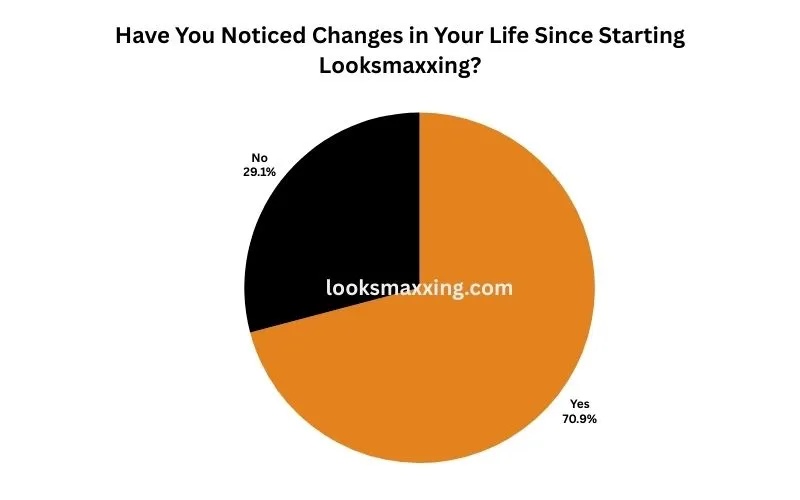
Life Impact: 70.9% noted changes in their lives since beginning looksmaxxing, with 87.1% of these individuals describing the changes as positive.
-
Mental Health Concerns: 55.5% acknowledged experiencing stress, anxiety, or other mental health issues related to looksmaxxing.
-
Community Division: 45.9% would not recommend looksmaxxing to others.
-
Media Representation: Only 8.8% of respondents feel the media accurately represents the community.
-
Top Three Motivations for Looksmaxxing: boost self-confidence (72.6%), improve dating success (50.9%), meet/exceed societal expectations (49.1%).
Demographics
The survey sample consisted primarily of youth and young adults:
-
Gender: 73.1% male, 25.7% female, 1.2% non-binary/prefer not to say
-
Age: 58.4% under 18, 35.8% aged 18-24, 4% aged 25-34, 1.2% aged 35-44, 0.6% aged 45+
-
Education: 62.1% in high school, 19.5% in college (undergraduate), 14.4% not in school
-
Employment: 70.1% students, 11.5% unemployed, 10.3% part-time employed
-
Primary regions: Europe (40%) and North America (34.9%), followed by Asia (17.7%)
This demographic profile reveals looksmaxxing is primarily attracting teenagers and college-age individuals who are still in formative stages of identity development. The significant percentage of minors raises important questions about vulnerability to appearance-focused messaging.
Motivations
Respondents cited multiple motivations for engaging in looksmaxxing, revealing complex social and psychological factors:
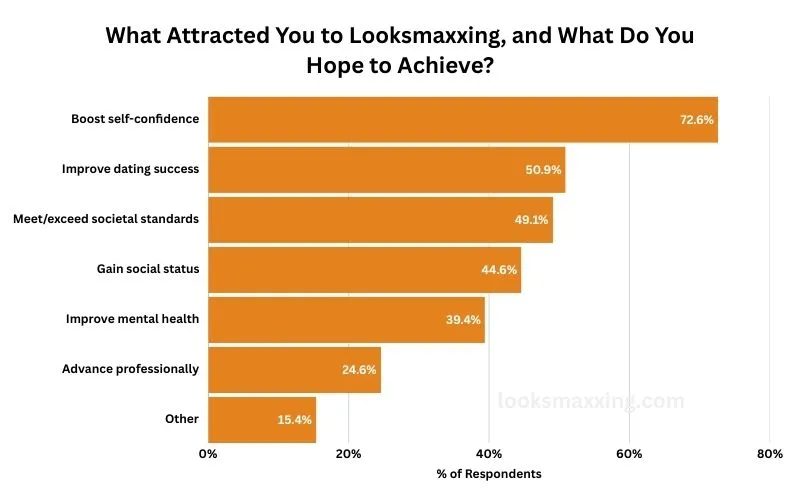
These motivations reflect deeper societal pressures where appearance increasingly influences social and economic opportunities, extending beyond mere vanity.
“i was one of the “ugly kids” at the start of highschool so even a slight change could make a difference in how people treat me, like fr i even had health issues at this point and now i do not consider myselft good-looking either i just glowed up from a 2 to a 4-5 out of 10 like i went from creep to friendzone” – Male respondent, under 18
“learning all about improving my health and appearance made me understand how to modify my eating habits as well as my exercise and general healthy habits and I find that my physical appearance is much better now and I notice that people tend to look at me a lot more than before” – Male respondent, 18-24
“People say I have changed and look way prettier, most of my old classmates dont recognize me and my family and friends want me to be a model.” – Female respondent, under 18
Methods & Practices
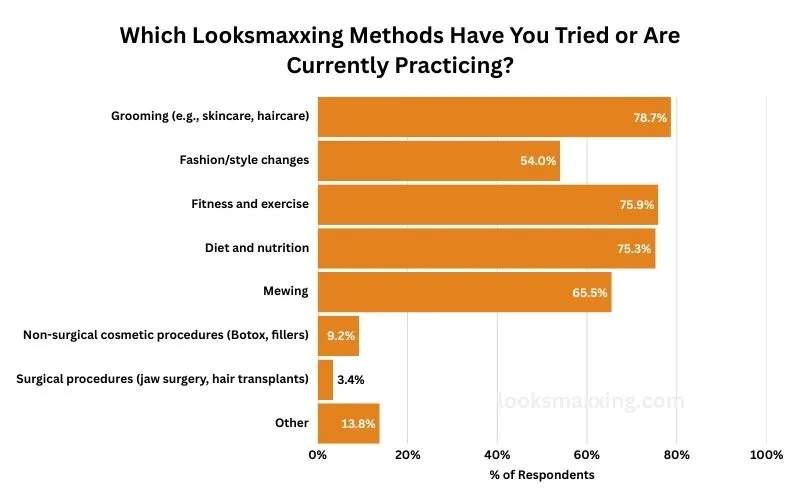
Our survey revealed a spectrum of approaches to appearance enhancement:
Currently Practicing:
Considering for the Future:
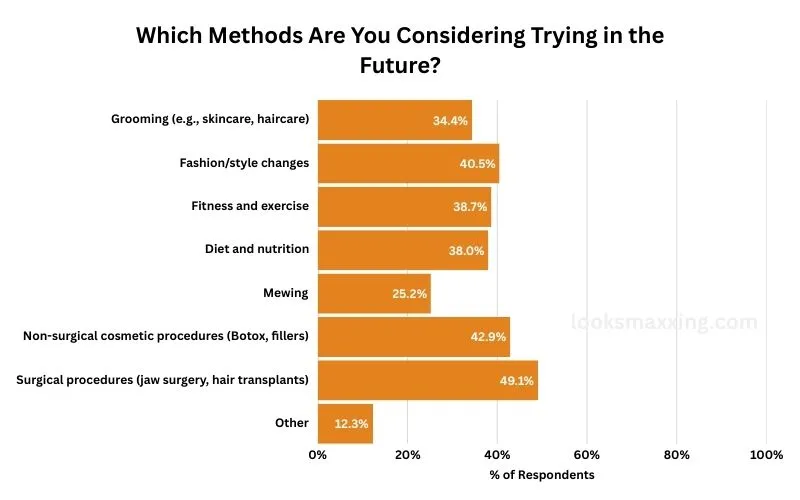
Fitness and diet sit at the top of that list, and they are the two methods on it you can actually put a number against. Our tools and calculators cover both: you can estimate your body fat from a tape measure, or work out your body mass index from height and weight.
The high adoption rate of “mewing” (a contested jaw reshaping technique promoted online) alongside mainstream health practices illustrates how easily trending methods spread within the community.
The Surgical Paradox: Low Experience, High Interest
One of the most notable findings is the gap between surgical experience and interest:
-
Only 3.4% have undergone cosmetic surgery procedures
-
Yet 49.1% are considering surgical interventions in the future
-
69.2% believe surgical procedures are a valid part of looksmaxxing
This suggests a potential surge in cosmetic procedures among young people in coming years as this cohort ages and gains financial independence.
“Many people have been cursed with extremely bad facial characteristics, so surgery is a valid method to fix them.” – Male Respondent, under 18
“1000%, in fact they are one of if not the most valid parts of looksmaxxing, true ascension.” – Male respondent, under 18
“They’re a lot of bullshit surgeries but some of them like Bimax, Trimax, SARPE, BSSO, Segmental Leforte are looksmaxxing and healthmaxxing surgeries.” – Male respondent, 18-24
Importance of Physical Appearance in Life
Respondents rated the importance of physical appearance in life on a scale of 1-5 (5 being most important):
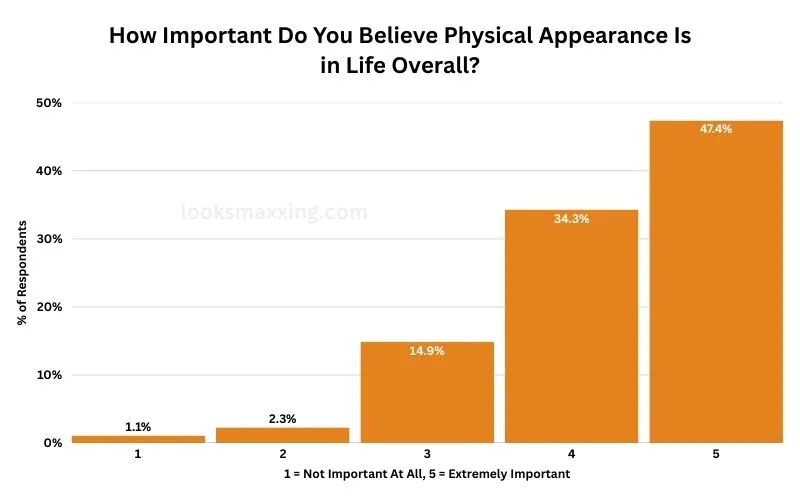
This indicates that 81.7% of respondents believe appearance is important or very important in life, revealing the intense value placed on physical attributes within the community.
“Physical appearance determines how hard you will need to work to get what you want and whether or not people will even consider giving you the time of day in any of your interactions with them” Non-binary respondent, Under 18
“Because looking bad can destroy you, but looking good won’t necessarily give you a better job then the ugly nerd who become a judge.” – Male respondent, 18-24
“because the first thing that even makes you approachable are looks, not ur personality (although important)” Male respondent, 18-24
“Its important but one can have a successful life without being a chad. Good looks just makes life a easier but one can be happy and have a good career/relationship without being a 10/10” – Female respondent, 18-24
Impact on Life & Wellbeing
Our survey reveals a striking contradiction in how looksmaxxing affects participants:
Results Satisfaction:
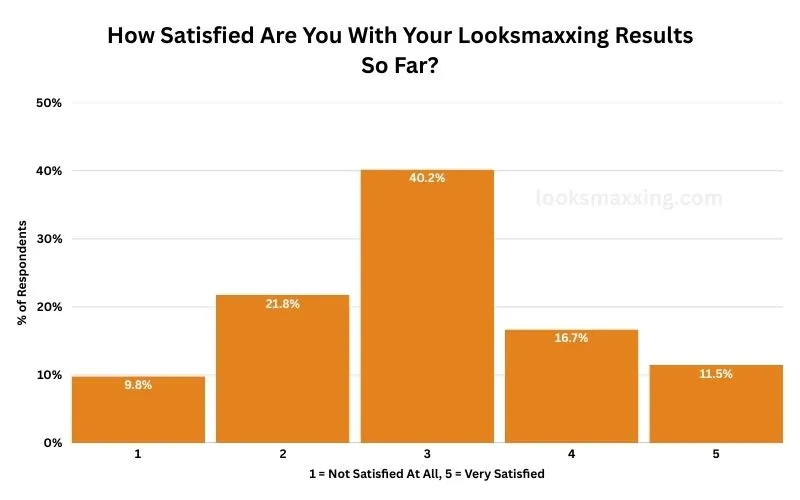
Life Impact
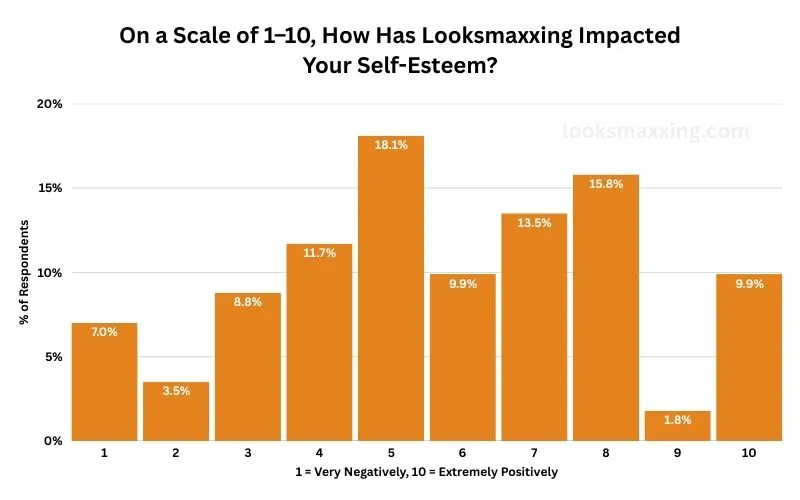
Self-Esteem Impact
Stress, Anxiety & Mental Health Impact
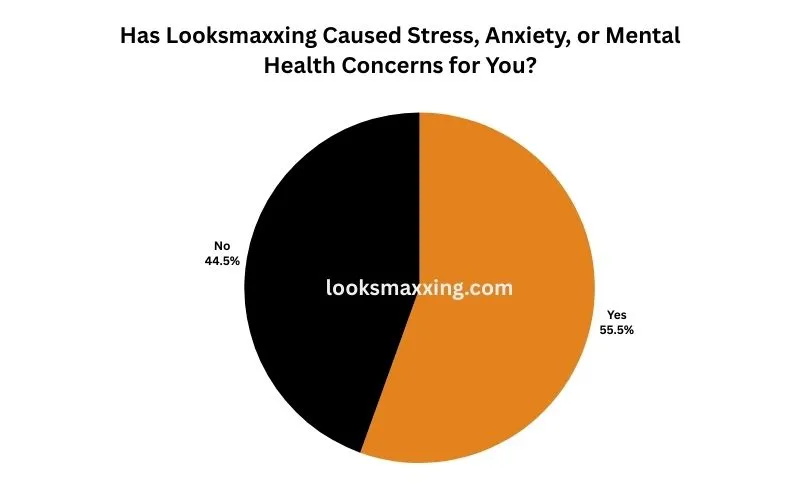
This paradox—where most report positive life changes yet many experience mental health concerns and wouldn’t recommend the practice to others—suggests a complex psychological relationship with appearance optimization.
Positive Changes
“People are nicer to conventionally attractive people. Looking better improves your quality of life.” – Female respondent, Under 18
“Ive gotten offers for doing pageants/modeling , I started to become more likable and attractive to people” – Female respondent, Under 18
“Significantly improved treatment from new acquaintances. New opportunities! Charisma improvements” – Male respondent, 18–24
Mental Health Concerns
“It makes you feel never enough and always stressed about your apperance because nowadays social media pushes us into unrealistic standarts and black pill makes u realize how much important your looks actually are .” – Male respondent, 18-24
“Mentally draining (because of BPD) but I’ll do whatever it takes” – Male respondent, Under 18
“It causes me to be depressed often and is the root cause for me wanting to kms.” – Female respondent, Under 18
Social Media Influence
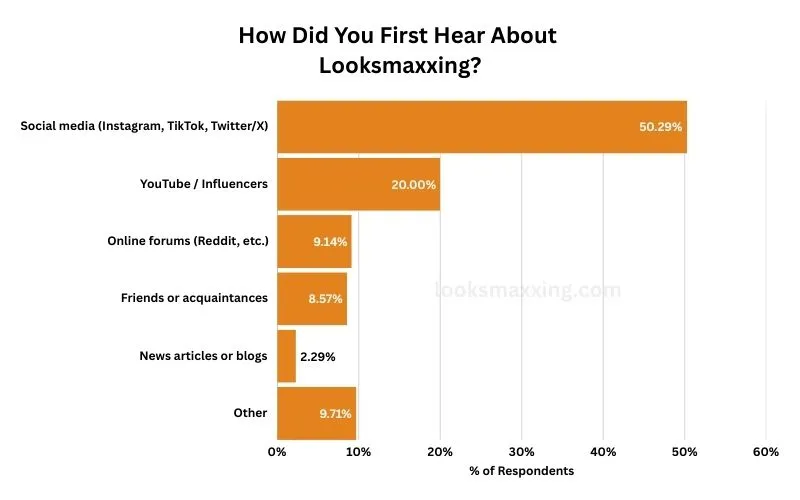
The survey found that looksmaxxing is primarily discovered and perpetuated through social media platforms:
Discovery of Looksmaxxing
Timeline of Discovery
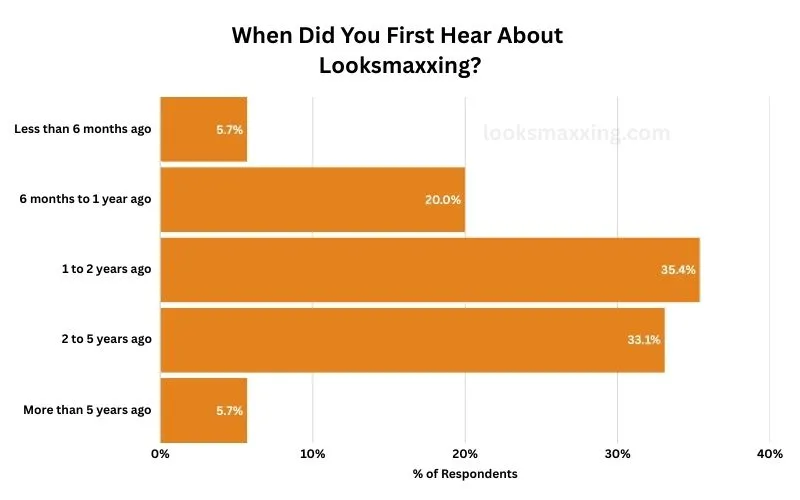
The visual nature of platforms like TikTok and Instagram appears to accelerate the spread of appearance-focused content, with algorithmic recommendations potentially increasing exposure to extreme beauty standards.
Community Engagement: Seeking Belonging & Improvement
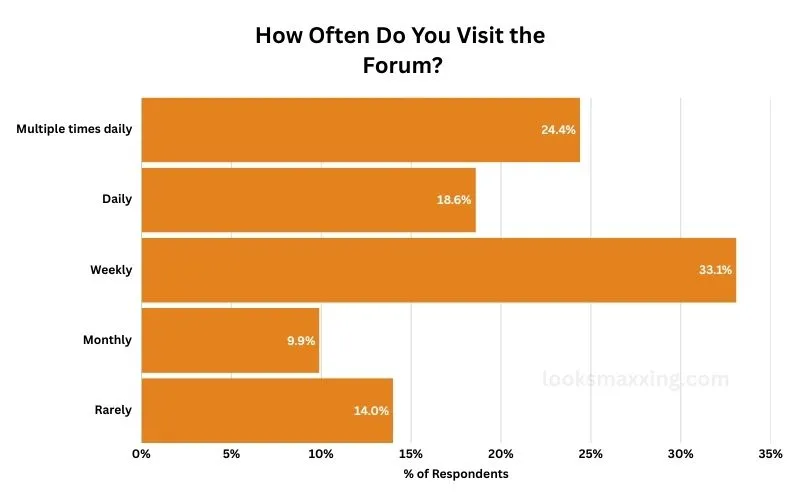
The survey revealed high engagement with the looksmaxxing community:
Forum Visitation
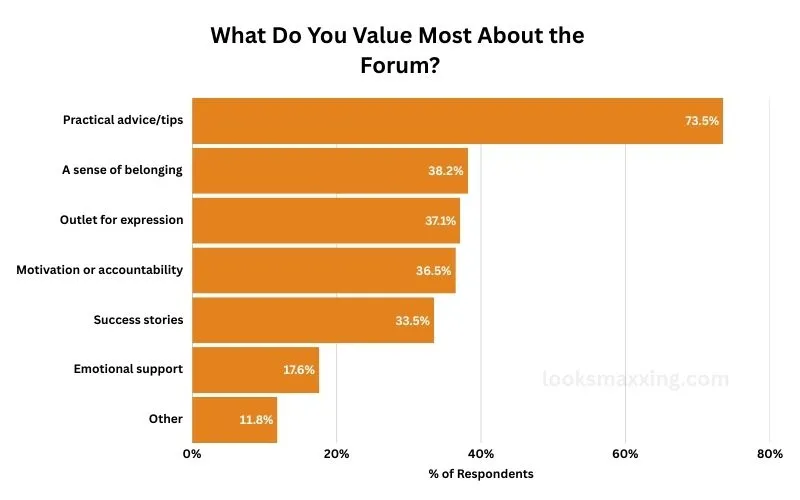
Value from Community
Meaningful Connections
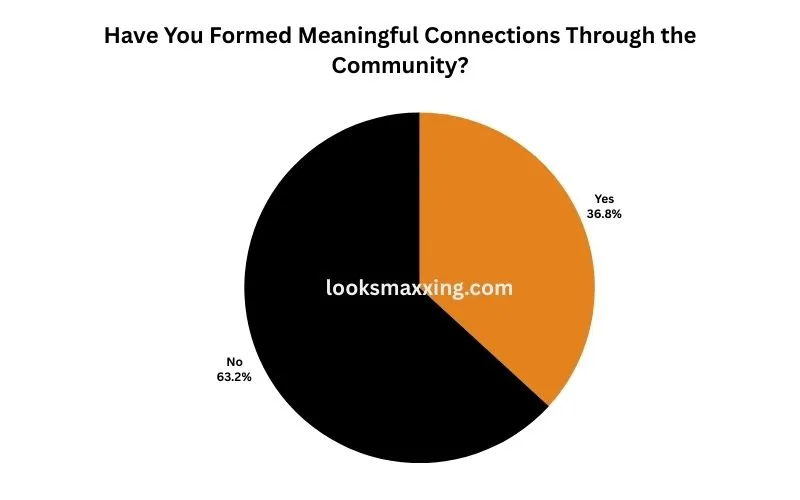
This engagement pattern suggests that while practical advice is the primary draw, emotional and social support also play important roles for many participants.
“I have made some great friends here , even if they left the community, we’re still have contact through insta or TikTok” – Male respondent, 18-24
“I’ve connected with people who have gone through similar experiences, and it’s incredibly comforting to know that I’m not alone. It feels good to be heard and understood by others who truly get what I’ve been through.” – Female respondent, under 18
“Made friends online with many people and it’s very cool to have a place where you can talk to people even when you are all alone.” – Male respondent, 18-24
The Looksmaxxing Paradox
Despite high engagement with looksmaxxing practices, our survey reveals a striking contradiction:
-
87.1% report positive life changes from looksmaxxing
-
55.5% experience mental health concerns related to looksmaxxing
-
45.9% would not recommend looksmaxxing to others
“my body improved, my confidence skyrocketed, and I picked up healthier habits that keep me thriving” – Female respondent, under 18
“Pretty negatively, I have to contemplate if I look good enough everyday for school and it wears a lot on my mental health” – Male respondent, Under 18
“Better off not knowing, it kinda corrupts your personality because it makes u think that hobbies and personality don’t matter.” – Male respondent, Under 18
Public Misconceptions About Looksmaxxing
Respondents identified several common misconceptions:
“That it’s only for incels, it’s for anyone ngl and they probably do it without noticing it.” – Male respondent, under 18
“That it is a cult. Of course, for some people and some ways it can be but people take the idea and put anyone under looksmaxxing as being a part of a cult. It is not a cult but a type of activity that people do when they want to improve looks, lifestyle, etc.” – Male respondent, 18-24
“not sure. maybe that it’s all just super insecure incels but there are some good people that give tips that you can use to help improve your appearance and groom yourself to look nicer instead of just hardcore surgery and boys arguing over who’s better looking lol.” – Female respondent, Under 18
Media Representation
Only 8.8% of participants feel the media portrays the community accurately; 50.3% say it does not, and 40.9% are unsure. Those who answered “no” told us what they wish outsiders understood:
“I wish more people knew about that risk many people would take to look better and that if they were in our shoes they would understand why we feel the need to do it, why we feel like we need to do it to get girls (even though even that probably won’t help.” – Male respondent, Under 18
“That looksmaxxing can really change your life for the better and that it’s most people in this world that have forced people to make a community like this so they shouldn’t shame.” – Male respondent, Under 18
“In some parts yes, in some no. The forum and everywhere else on the internet, there’s a lot of looksmaxxers that will take it too far telling you to “ropemaxx”. This is very toxic behavior, you could say “incel” behavior. So I understand why many people think looksmaxxing is harmful for your mental health. But I do believe there’s still good. Because there’s people who are just trying to improve themselves, and there’s nothing wrong with that.” – Male respondent, Under 18
Conclusion
Our survey reveals a complex landscape where physical appearance plays a central role in participants’ lives. The looksmaxxing community, primarily composed of young people, demonstrates both the positive and negative aspects of appearance optimization.
The significant interest in surgical procedures (49.1%) among a predominantly young demographic raises important questions about the psychological impact of beauty standards on youth. While many report positive life changes, the high rate of mental health concerns (55.5%) suggests a need for more balanced approaches to appearance enhancement.
The community appears to be at a crossroads, with nearly half of practitioners reluctant to recommend looksmaxxing to others despite personally engaging in it. This paradox highlights the nuanced relationship between appearance, self-esteem, and mental wellbeing in contemporary society.
Methodology
This survey was conducted online in March 2025, targeting active Looksmaxxing Forum members. The survey was distributed through the forum’s communication channels and collected 175 responses. All responses were anonymous, and data was analyzed using statistical analysis software.
Contact Information
Approximately 40% of survey respondents indicated willingness to share their experiences further, with 20.8% preferring anonymity and 18.5% open to being identified.
Related articles
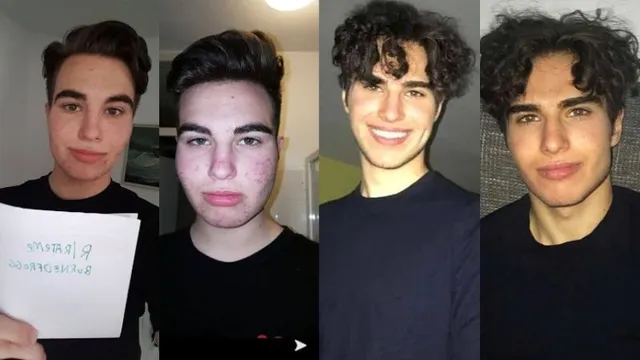
Larsanova Interview: From Subhuman to Chad
Larsanova shares his looksmaxxing journey - from acne and excess weight to a full transformation and a new outlook on life.
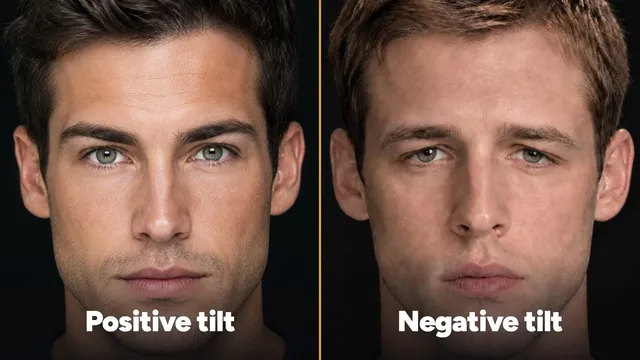
Canthal Tilt: What's Normal and What's Attractive
What canthal tilt is, what's normal, and whether positive really beats negative. In rated photos, the most attractive faces had the most upward tilt.
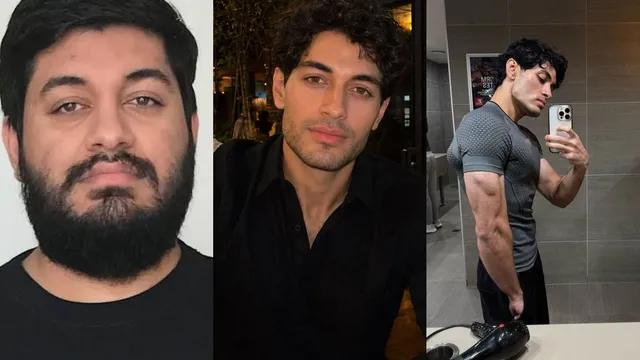
Sal P: A Complete Looksmaxxing Transformation at 28
Obese and burnt out at 28, barely recognizable four years later. Every stage in the order he did it, for anyone who thinks they started too late.