Your facial geometry translated onto the PSL scale, the 1 to 8 rating used on looksmaxxing forums. It is reported as a range, because one photograph does not support a single figure.
Choose one clear, front-on photo
Looking at the camera, even light, hair off your forehead, no
glasses.
JPG, PNG or WebP up to 10 MB, or drag one here
Your photo never leaves your device.
PSL range
Add a photo and this fills in.
Geometry score it came from
not yet /100
Where that sits
not yet
Typically the community scale runs roughly 1 to 8
Taking the measurement
1
Take a front-on photo
Square to the camera, even light, no glasses, hair off the forehead.
2
Choose the file
It is read in your browser and goes nowhere else.
3
Read the range, not a point
The output is a band. Anyone reporting a PSL score to one decimal place from a single photograph is claiming precision that does not exist.
Example
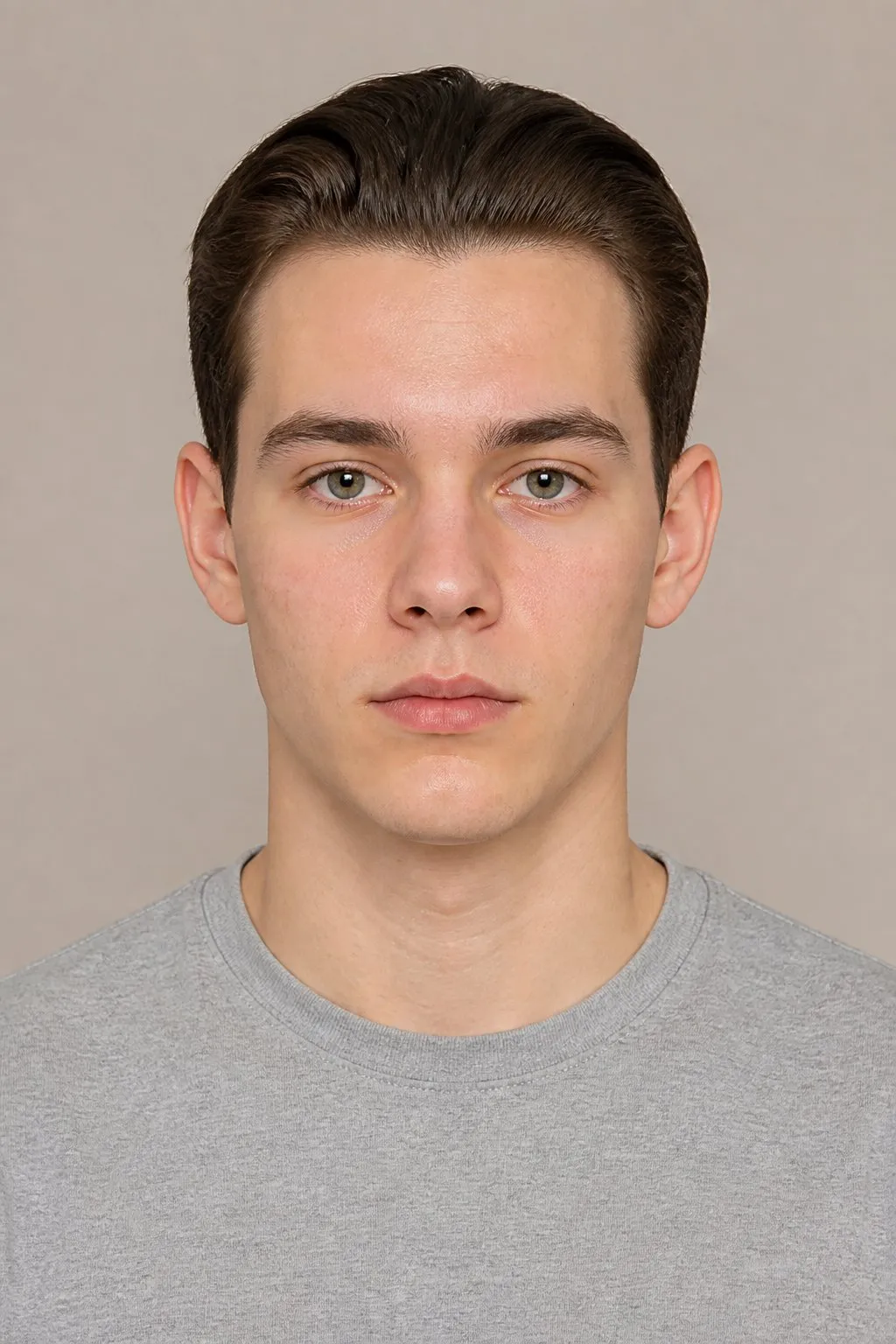
Paired landmarks, measured against the midline.
Drawn from the landmarks our own measurement reads off this photo, not
placed by hand. It is a generated face, not a real person, and nothing
here is a verdict about it.
PSL is a community rating scale, named after three forums, that scores faces roughly 1 to 8. This tool measures your facial geometry and translates it onto that scale as a range rather than a single figure, because one photograph does not support more precision than that.
How this is worked out
The same geometry as the attractiveness test
Symmetry at 35%, averageness at 35%, vertical and horizontal balance at 15% each. This page is that engine with a different output vocabulary, which is the only reason it is a separate page.
Translated onto 1 to 8
The geometry score maps linearly onto the scale's usable middle, then a range of one point is reported around it. The scale itself has no published definition, no calibration and no authority behind it, so a narrower answer would be false precision.
What each measurement is
Reference bands are this tool's own, chosen for the landmarks it uses.
Where research reports a figure it is given separately, with the source,
because the two are different claims. And each one says what actually
moves it, which for most facial measurements is the more useful half.
PSL range
Formula
the geometry score below, mapped onto the scale's usable middle, reported as a one-point band
Reference
the community scale runs roughly 1 to 8
A range rather than a point, because one photograph does not support a decimal place on an eight-point scale.
What moves it The scale has no published definition, so there is no band anybody can tell you to reach and anyone quoting one is quoting a forum. What genuinely moves how a face reads is body fat, skin, hair and sleep - none of which this geometry measures, and all of which move faster than anything it does measure.
PSL is a community rating scale, named after three forums, that scores faces
roughly 1 to 8. This tool measures your facial geometry and translates it onto
that scale.
It reports a range rather than a single figure, and the reason is worth reading
before the number.
Where the scale came from
PuaHate, SlutHate and Lookism. Three forums, largely gone now, whose users
needed shorthand for comparing faces and settled on a rough eight-point scale.
That is the whole origin. There is no paper behind it, no calibration study, no
agreed definition of what separates a 5 from a 6. Different corners of the
community use the numbers differently, and the same face gets rated a point
apart by two people using the scale in good faith.
None of that makes it useless as vocabulary. It makes it folk vocabulary, which
is how the glossary files it, alongside mogging and
looksmatch, and how this page treats it.
What this tool actually measures
The geometry underneath is the same as the
attractiveness test: symmetry at 35%, averageness at
35%, vertical and horizontal balance at 15% each, with the reasoning for each
weight printed on that page.
Two of those components rest on real research. Rhodes reviewed the field in
Annual Review of Psychology and found symmetry and averageness both attractive
across cultures. Pallett and colleagues measured the spacing that rates best and
found it matches an average face.
What the research does not do is map any of that onto a scale from a defunct
forum. That step is convention, and it is ours. We describe it above rather
than hiding it, because a number whose derivation is hidden is an oracle.
Why you get a range
A single decimal place on an eight-point scale implies you could tell a 5.2 from
a 5.4.
You cannot, from one photograph. Camera angle alone moves these measurements
enough to shift a result by most of a point. A slightly raised chin lengthens
the lower third. A phone held off-square drops your symmetry. Light from one
side changes where the landmark model places your jaw.
So the output is a band about a point wide, which is roughly the honest width of
what a photo supports. Any tool handing you a precise PSL figure is either
ignoring that or hoping you will.
The part of PSL culture worth being careful about
The scale is a ladder, and ladders are what this corner of the internet does
badly.
A measurement describes a face. A tier describes a person, and once someone has
a number attached to themselves, the number starts doing work it cannot support:
deciding what to try, whether to bother, what is possible. The forums the scale
is named after are gone partly because that spiral is where they ended up.
We are not going to pretend the scale does not exist, because you searched for
it and something will answer you. What we will do is report it as a range, show
the geometry underneath, and not tell you what it means about your life. It does
not mean anything about your life.
What actually moves
Body fat, first and fastest. Facial definition tracks total body fat and it
responds within weeks. The body fat estimate gives you a
figure to follow.
Grooming, hair and skin, which are absent from this measurement entirely and
do more for how a face reads than any proportion on this page.
Not spacing, and mostly not symmetry. Both are structural.
If you want the component view rather than a tier, the
attractiveness test shows the same geometry broken
into its four parts, which tells you which one is actually low.
If the number is making things worse
Checking once is ordinary curiosity. Checking repeatedly and feeling worse each
time is a pattern this community sees a lot of, and it matters more than the
figure.
If that is where this is going, talk to someone: a doctor, or a mental health
line where you are.
PSL is a community rating scale, named after three forums, that scores faces roughly 1 to 8. It grew out of forum culture rather than research, it has no published definition, and different communities use the numbers differently.
What does PSL stand for?
The three forums the scale came from: PuaHate, SlutHate and Lookism. The name is historical and the sites themselves are largely gone.
What is a good PSL score?
There is no authority that could answer that, because the scale has no published definition. Numbers circulate on forums and are applied inconsistently. We report a range and do not tell anyone what to aim for.
How accurate is a PSL calculator?
Any PSL figure is a translation of some other measurement onto an undefined scale. Ours is honest about the chain: geometry we can show you, mapped onto a scale that has no calibration. Treat the range as approximate and the scale itself as folk vocabulary.
What is the average PSL score?
Nobody has measured it, because the scale has no standard definition to measure against. Figures quoted as averages are community convention, not data.
Why is the result a range instead of a number?
Because one photograph cannot support a decimal place. Camera angle alone moves these measurements enough to shift a point on an eight-point scale, and a precise-looking figure would imply a confidence the method has not got.
Is the PSL scale scientific?
No. It is community vocabulary. The measurements underneath this tool are grounded in published research on symmetry and averageness, but the act of mapping them onto 1 to 8 is convention, and we would rather say so than dress it up.
Is this the same as an attractiveness score?
Same engine, different output. Our attractiveness test reports the same geometry out of 100 with each component shown separately, which is the more useful form if you want to know what is driving the number.
Is my photo uploaded?
No. Everything runs in your browser. There is no upload endpoint, and the site's content security policy prevents connections to any other domain, which you can check in the response headers.
What is a PSL god?
Community shorthand for someone at the top of the scale. Like most of the scale's vocabulary it is used loosely, and it describes a tier rather than a measurement.
Does PSL account for height or body?
Forum usage varies and some people fold those in. This tool measures the face only. If torso shape is what you are after, the shoulder-to-waist ratio has better evidence behind it than anything on the PSL scale.
Why do different PSL calculators give me different scores?
Because there is nothing to agree on. No published definition means every tool invents its own mapping, and most do not tell you what theirs is. Ours is described above.
Find your face shape from a photo, measured from the real outline rather than guessed, with the runner-up shape and the three ratios behind the answer.
Open the tool
Join 7,800 subscribers
Email on appearance - what works, what the research says, and what people in the community are actually trying.
What works, what doesn't, and what the research says. Unsubscribe whenever
you want.